

Bigger isn’t always better
For a growing number of meeting planners, the right venue is the one where their group never gets lost, whether in the building, the agenda or the shuffle of a sprawling campus.
Denise Niebrugge, Vice President of Convention Center Sales at CHI Health Center Omaha, hears that shift in nearly every client conversation. Here’s what planners are asking for now and how Omaha’s convention center is evolving to deliver it.
Breakouts are back, and planners want them close
After several years of streamlined agendas, breakout programming is surging again. The catch is that organizers don’t want attendees scattering across downtown to find their next room.
“Hotel meeting space works in a pinch, but nobody wants to lose half their audience on the walk over,” Niebrugge said. “Planners want every session a few steps from the next.”
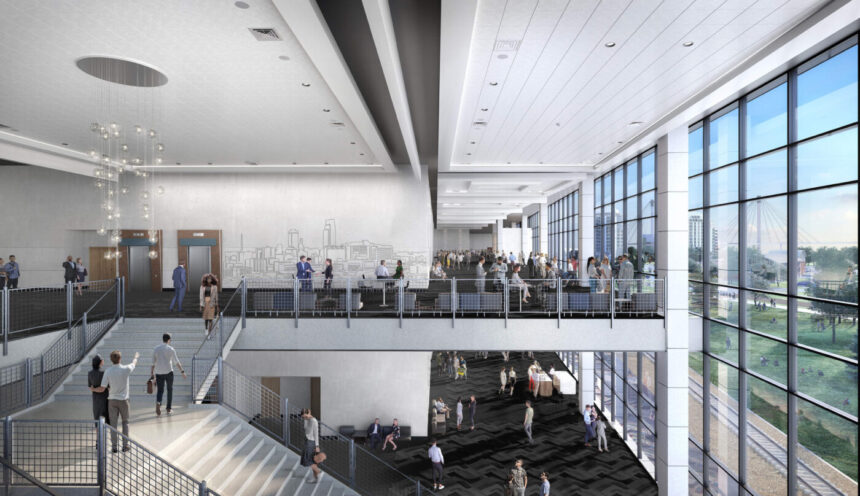
That demand is shaping CHI Health Center Omaha’s expansion. New breakout rooms and pre-function areas will bring the building to 420,000 square feet when it opens in fall 2027.
The convention center with an attached arena
Few U.S. markets can put exhibit halls, ballrooms and an 18,000-seat arena in a single connected building. Omaha can, and planners are taking notice.
“It changes what an agenda can look like,” Niebrugge said. “Your keynote can fill an arena in the morning, attendees can split into dozens of breakout rooms just steps away and everyone can come back together for the closing session or a headline concert, all without a shuttle or an umbrella.”
Why mid-size venues deliver a better attendee experience
CHI Health Center Omaha competes on attention as much as square footage. In the industry’s largest buildings, a single convention can become one booking among many.
“In a building our size, your event isn’t competing for our focus,” Niebrugge said. “Our team knows every group in the house and what it needs, and that shows up in the details.”
The scale pays off for attendees too. Simple way-finding means less time hunting for rooms, and a more compact footprint keeps groups together.
“When people can actually find each other, networking takes care of itself,” she said.
Collaboration is the new competitive edge
The trend Niebrugge sees most clearly has nothing to do with buildings. Planners increasingly judge a destination by how well its partners work together, from the venue to the convention and visitors bureau team at Visit Omaha, hotels and downtown businesses.
“Planners can tell within one site visit whether a city’s partners are aligned,” she said. “In Omaha, everyone sits at the same table, and the client is always the first item on the agenda.”
That coordination turns separate vendors into a single, comprehensive plan, which is exactly what organizers want to hand their leadership.
Midwest value in a rising-cost market
Food and beverage pricing remains top of mind across the meetings industry. Here, Omaha’s Midwest cost structure gives planners room to breathe.
“Every planner is watching F&B right now,” Niebrugge said. “Even something as simple as a coffee break costs less here than in many competing cities, and those savings add up over a three-day program.”
Room to grow
With the expansion opening in fall 2027, a downtown streetcar arriving in 2028 and a 72-acre riverfront park just outside its doors, CHI Health Center Omaha is building a complete meeting destination in the heart of the Midwest.
“Our challenge now is keeping pace with demand, and that’s a good problem to have,” Niebrugge said. “We’re growing our team so that planners and clients can be confident that we are able to deliver on their highest expectations.”
Planning a future event? Explore CHI Health Center Omaha’s meeting space at Meet in Omaha or connect with our convention sales team.